
As South Carolina schools report encouraging gains in reading achievement, the South Carolina Commission on Higher Education is working with colleges and universities to help prepare the next generation of teachers to build on that progress.
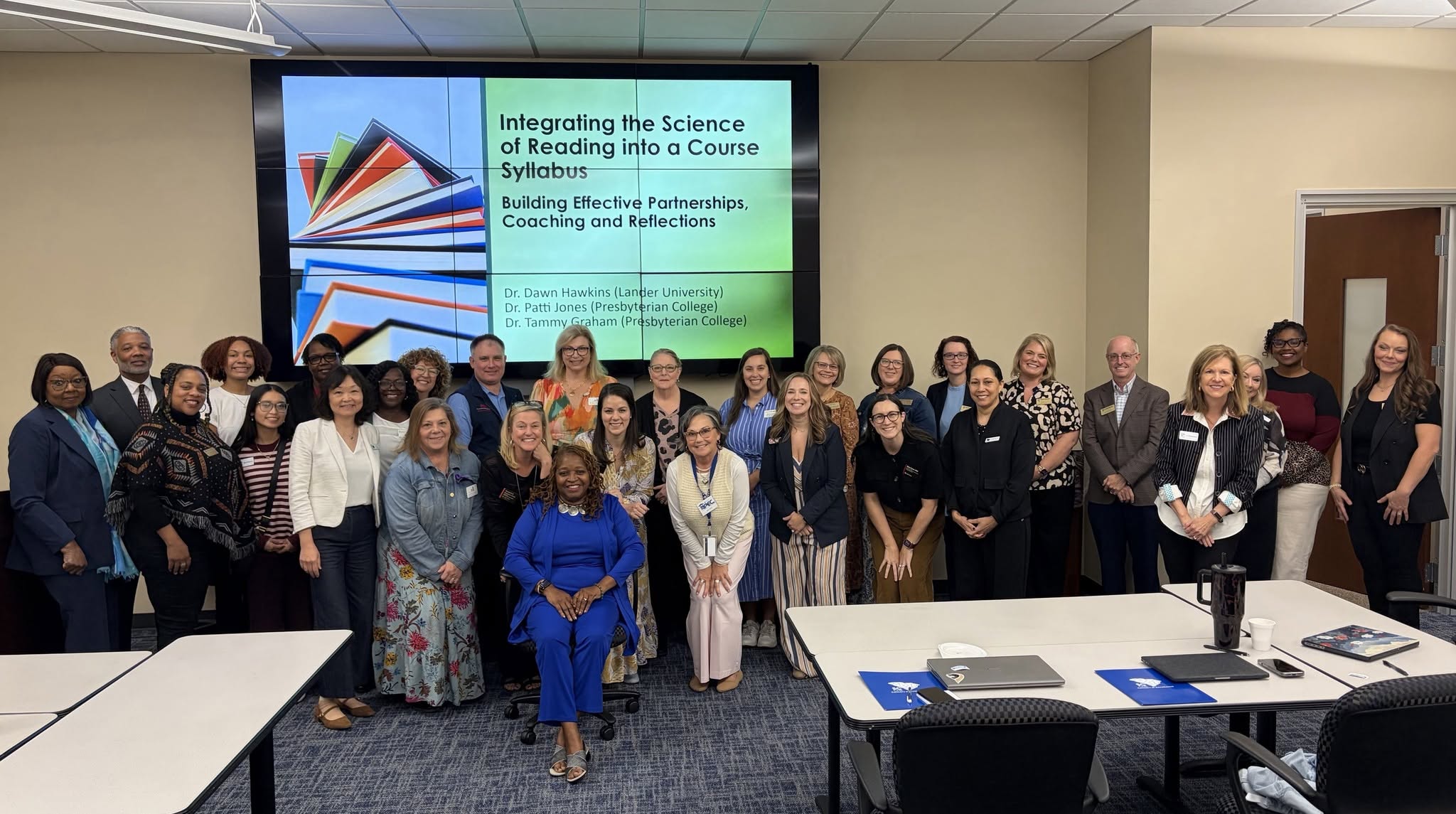
Educator preparation faculty from 15 public and private colleges and universities across South Carolina gathered in Columbia Oct. 23 for a Science of Reading Seminar hosted by CHE which focused on integrating evidence-based literacy instruction into college coursework for future teachers.
The seminar was a component of CHE's Centers of Excellence program, which supports innovative approaches to teacher preparation, professional development and partnerships between higher education institutions and P–12 schools, particularly in rural and underperforming districts.
The event came amid promising statewide education results. South Carolina's 2026 school report cards showed 320 schools earning an “Excellent” rating, an increase of 50 from the previous year and the highest number since the current rating system began in 2018. More than 90 percent of schools earned ratings of “Average” or better, while statewide reading scores also improved. State Superintendent of Education Ellen Weaver recently cited Science of Reading training as one factor contributing to the progress.
CHE President and Executive Director Dr. Jeffrey Perez emphasized the importance of literacy instruction and the role educators play in helping students develop essential reading skills.
“You all truly have a mission, and we at CHE are so proud to be able to support you with that mission,” Perez told participants. “We believe in that sense of innovation.”
Understanding the Science of Reading
 For future teachers, the Science of Reading provides a research-based framework for understanding how students learn to read and how different instructional strategies work together to develop literacy skills.
Dr. Dawn Hawkins, director of Lander University's Center of Excellence for the Science of Reading, described the approach as a playbook that helps educators connect the individual components of reading and writing.
Rather than teaching skills such as phonics, decoding, vocabulary and reading comprehension in isolation, the approach emphasizes how those components support one another. It also places greater emphasis on direct, explicit instruction and modeling that help students understand and apply what they are learning.
“It's like a puzzle. What are the puzzle pieces that come together? What are the blocks that come together that are needed to be a skilled reader?” Hawkins said of the structured approach. “It's also giving a playbook of all the different components that should come together for the purpose of reading and writing.”
While foundational reading instruction is especially important in prekindergarten through third grade, Hawkins explained that other skills, including vocabulary and understanding word structure, remain important throughout elementary education and beyond.
For students preparing to enter the teaching profession, that structure can provide a clearer path from learning instructional concepts to applying them in classrooms.
Presbyterian College senior Bea Polinario, who plans to teach early childhood education, attended the seminar to provide a student perspective and said her experiences with tutoring and clinical preparation have helped her better understand how to approach instruction.
“When I first did it, I didn't really know how to tutor,” Polinario said. “But as a senior now, I definitely feel like I have more clarity this time.”
Fellow Presbyterian College student Katie Stevenson, who hopes to teach elementary special education, said the structured approach helps future educators feel more confident as they prepare for classroom responsibilities.
“Having the structure ... I felt like that just brings confidence for the student teachers,” Stevenson said.
Dr. Lishu Yin, CHE’s program manager for educator quality, retention, and recruitment, also emphasized that in addition to providing teachers with this framework to use after graduation in their own classrooms, there is a more immediate benefit in the form of additional literacy education support they provide while tutoring at the participating elementary schools.
Supporting instruction across South Carolina
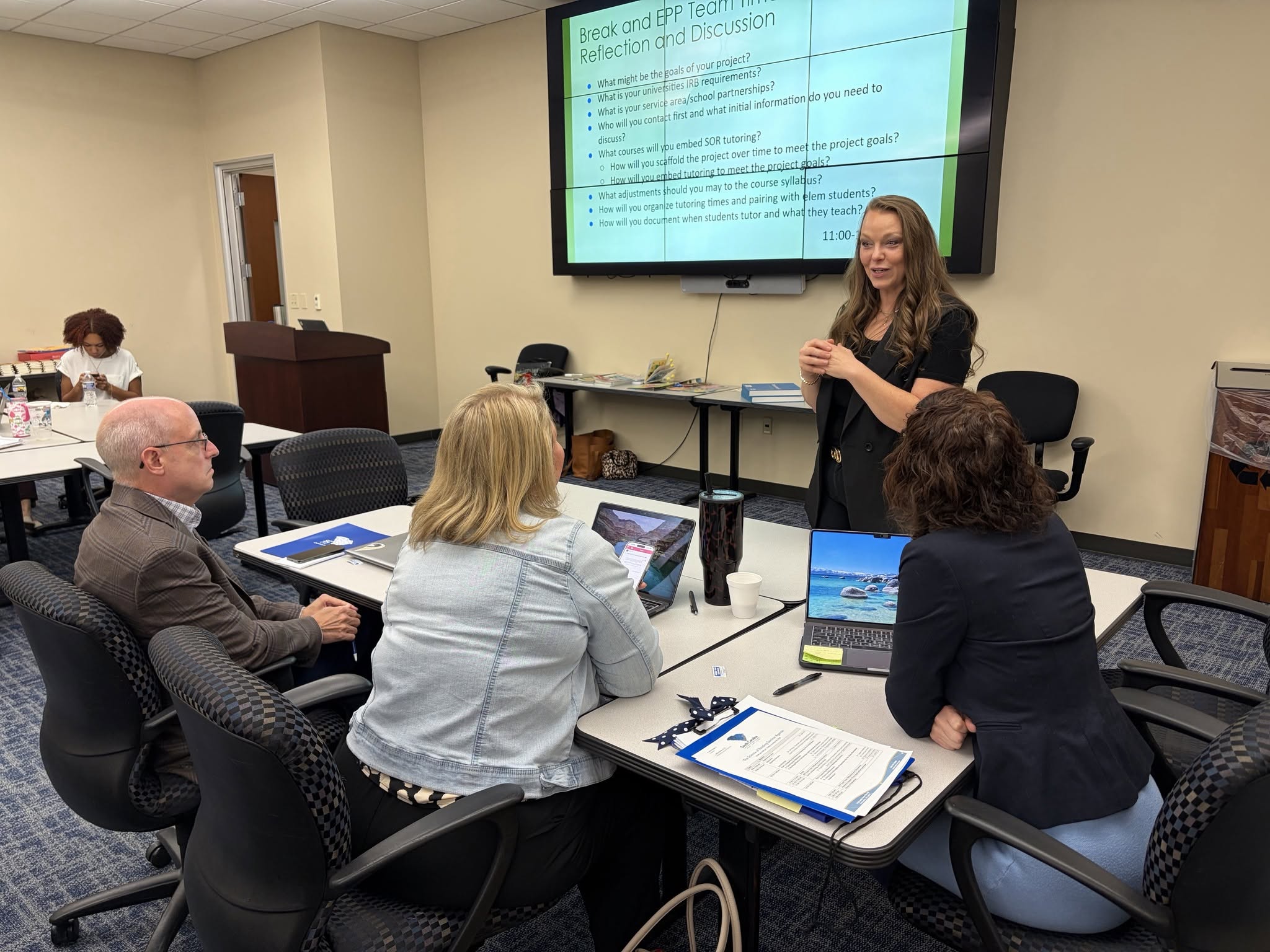
Throughout the seminar, faculty explored ways to incorporate Science of Reading principles into existing coursework, develop partnerships with elementary schools and use assessment data to strengthen teacher preparation.
Presenters included Hawkins, and Dr. Patricia Jones and Dr. Tammy Graham of Presbyterian College. Participating faculty also worked in institutional teams to consider how the strategies and resources discussed could be applied within their own educator preparation programs.
Following the seminar, participating institutions are eligible to apply for CHE Resource Support Grants to purchase instructional materials and other resources that support integrating Science of Reading practices into their coursework.
The initiative extends the work of CHE's Centers of Excellence, which have supported efforts addressing literacy, mathematics education, alternative certification pathways, educational leadership and teacher retention.
By connecting research, educator preparation and classroom practice, CHE and its institutional partners are working to ensure future teachers enter the profession with the knowledge and tools needed to help students become successful readers.
Learn More
- CHE Centers of Excellence Page (Includes information on the next Science of Reading seminar on January 22, 2027)
- Center for the Advancement of Reading and Literacy Instruction (CARLI)
- CARLI Science of Reading Resource Page