
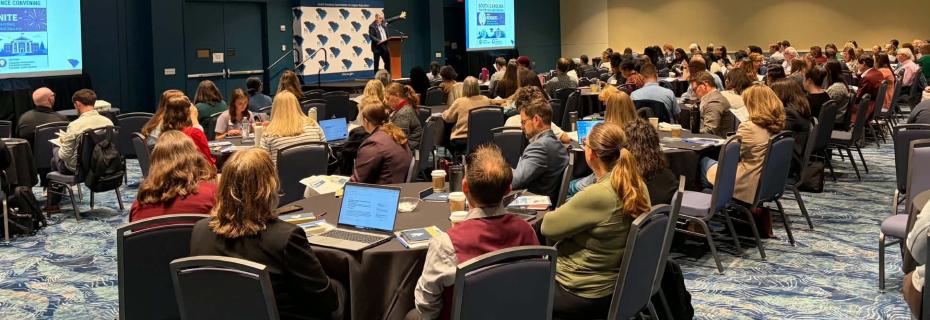
The South Carolina Commission on Higher Education brought together approximately 180 higher education professionals representing more than 40 campuses Tuesday for the 2026 Transfer Excellence Convening in Columbia, an annual event created to strengthen partnerships and make transferring between colleges easier while maximizing every credit that students earn.
The convening, now in its fifth year, was the largest yet. Themed Reignite – Sparking Innovation, Fueling Student Success, it emphasized practical solutions and collaboration among South Carolina's public, independent and technical colleges.
According to the National Student Clearinghouse Research Center, college transfer enrollment increased 4.4 percent in fall 2024, the third consecutive year of growth nationally. Transfer students accounted for approximately 13 percent of continuing and returning undergraduates, reflecting a growing need for institutions to accommodate students whose educational journeys may include multiple colleges, career changes or periods away from school.
“You all have your own different experiences, and it is so important to bring you all together and give you an opportunity to share what you've experienced on a local level with each other,” said CHE President and Executive Director Dr. Jeffrey Perez. "What you all do by helping students start at a technical college and then transfer to a four-year, or earn reverse transfer, is helping them understand the process. You are giving them entrée to the college experience, something they may not have without your support."
Federal perspective on transfer and affordability
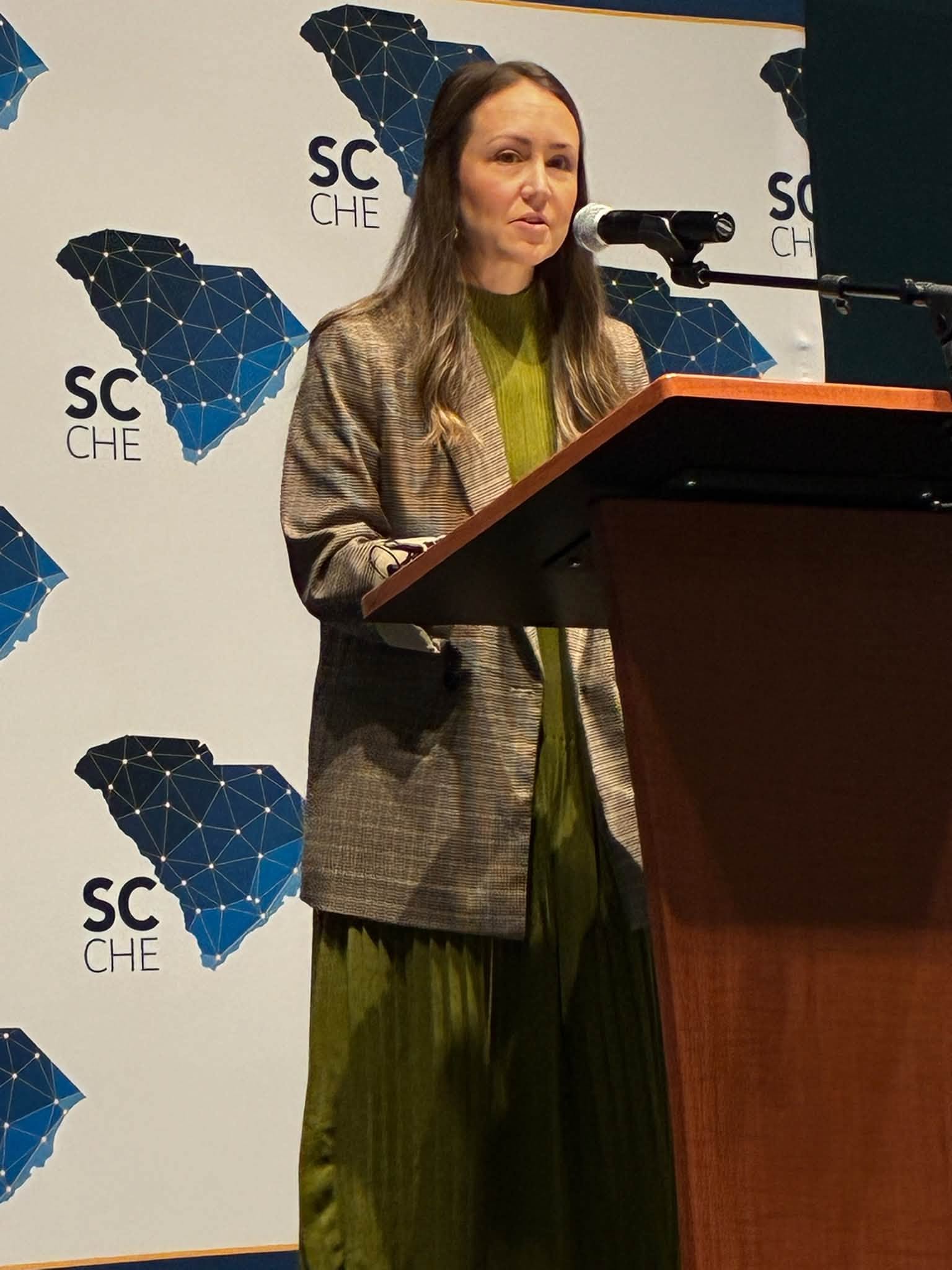 Keynote speaker Ashley Reich, deputy under secretary and chief of staff to the under secretary at the U.S. Department of Education, discussed federal higher education initiatives, including efforts to improve affordability, expand educational pathways and strengthen credit transfer policies.
"I'm pleased to highlight that there are other provisions which, if they're enacted, would facilitate access to opportunity by requiring institutions to presume the transfer of credit between schools," Reich said.
She explained that proposed federal accreditation regulations would establish additional expectations for institutional transfer policies, including criteria for accepting credits and mechanisms for student appeals.
Reich also discussed changes to federal student aid programs and the expansion of financial assistance for short-term workforce training, emphasizing the importance of providing educational options that align with students' interests and career goals.
Building on statewide progress
South Carolina's transfer improvement efforts have advanced significantly in recent years through institutional partnerships, expanded student resources and new tools for evaluating transfer outcomes, in part due to the efforts of the Transfer Excellence Council. It is comprised of members from institutions across the state as well as the South Carolina Technical College System.
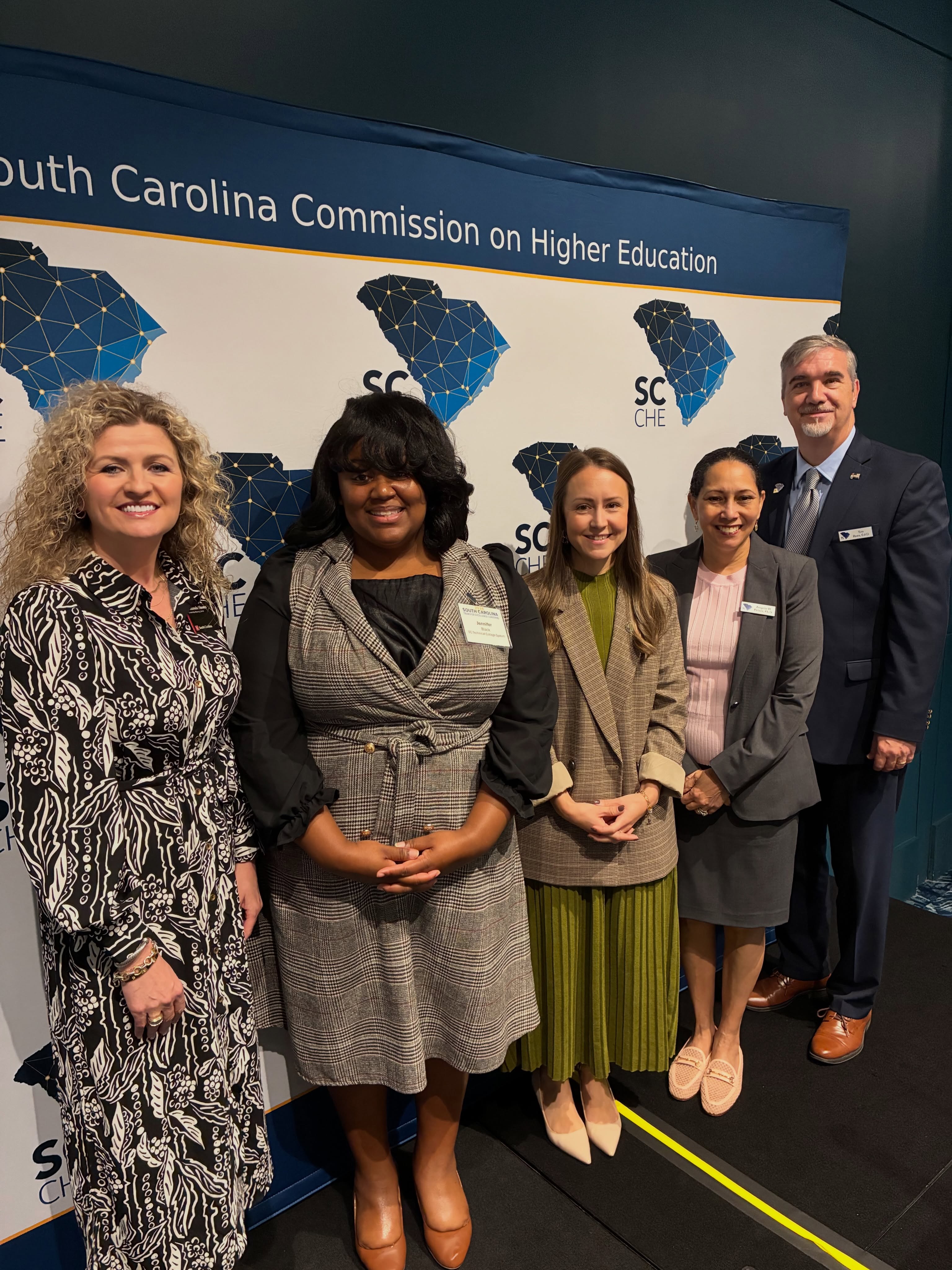
Transfer Excellence Council leaders Amanda Shores, USC-Columbia; and Jennifer Black, SCTCS, provided an update on recent transfer-related developments:
- Statewide coordination: Reestablishing the Transfer Excellence Council with broad institutional representation and ongoing collaboration among participating colleges and universities.
- Data and resources: The launch of the South Carolina Transfer Outcomes Dashboard, which provides greater insight into student transfer patterns and outcomes while expanding resources for students and institutions.
- Transfer agreements: Securing signed statements of commitment from public institutions toward developing a comprehensive statewide transfer agreement.
- Student engagement: Increased traffic to the statewide transfer portal by 12 percent year over year.
They also outlined a renewed organizational structure that builds on the 2023 Transfer Action Plan’s initiative's original six recommendations rather than replacing them. It is centered on three priorities: credits, communication and cost. The working groups will focus on preserving students' earned credits, improving access to transfer information and advising, and identifying financial resources and strategies to make transfer more affordable.
“This is going to bring together much of the remaining work related to preserving credits students have earned, and this connects directly with the recommendation around statewide data articulation, transfer agreements, the transfer portal, and reverse transfer,” Shores said.
Black added that the council will focus on concrete progress in the next year.
“By the time we come together for next year's convening, our goal is to have developed actionable recommendations and proposed next steps that advance this area of our statewide transfer priorities,” she said. “Ultimately, we want to be able to come back together next year and talk not only about the conversations we had, but what was moved forward because of them.”
An opportunity to connect and collaborate
Throughout the day, participants engaged in breakout sessions, regional discussions and collaborative workshops designed to share successful practices, address persistent transfer challenges and identify opportunities for institutional partnerships.
Sessions provided participants with practical strategies and resources focused on:
- Preserving credits and reducing costs: Exploring approaches to evaluating transfer credits, improving their applicability toward degree requirements and reducing unnecessary coursework that can increase students' costs and delay graduation.
- Strengthening advising and student support: Identifying effective advising practices, transfer planning tools and student services that help students navigate transitions between institutions and maintain progress toward graduation.
- Expanding institutional partnerships: Examining successful transfer pathways involving technical colleges, regional campuses and four-year institutions, with particular attention to rural communities and opportunities for earlier college access.
- Connecting education and workforce needs: Developing transfer pathways that align academic programs, credentials and workforce opportunities in fields such as healthcare, education, manufacturing and information technology.
- Using data and technology: Exploring CHE's Transfer Outcomes Dashboard, credit mobility tools and institutional performance measures to better understand transfer patterns, identify barriers and evaluate student outcomes.
- Building sustainable systems: Identifying opportunities for stronger coordination among academic departments, admissions, registrars, student services and institutional leadership to improve the transfer experience.
- Regional collaboration sessions brought together participants from the Upstate, Midlands and Lowcountry to discuss shared challenges and opportunities.
Additional interest-area discussions allowed attendees to connect with colleagues working in similar roles, explore practical applications of transfer data and learn how to become more involved in the statewide Transfer Excellence Council.
Learn more about transfer excellence initiatives in South Carolina:
- CHE Transfer Excellence Center
- Action plan offers recommendations to improve student transfer in South Carolina
- South Carolina Transfer Outcomes Dashboard
- Transfer Student Success Guide